
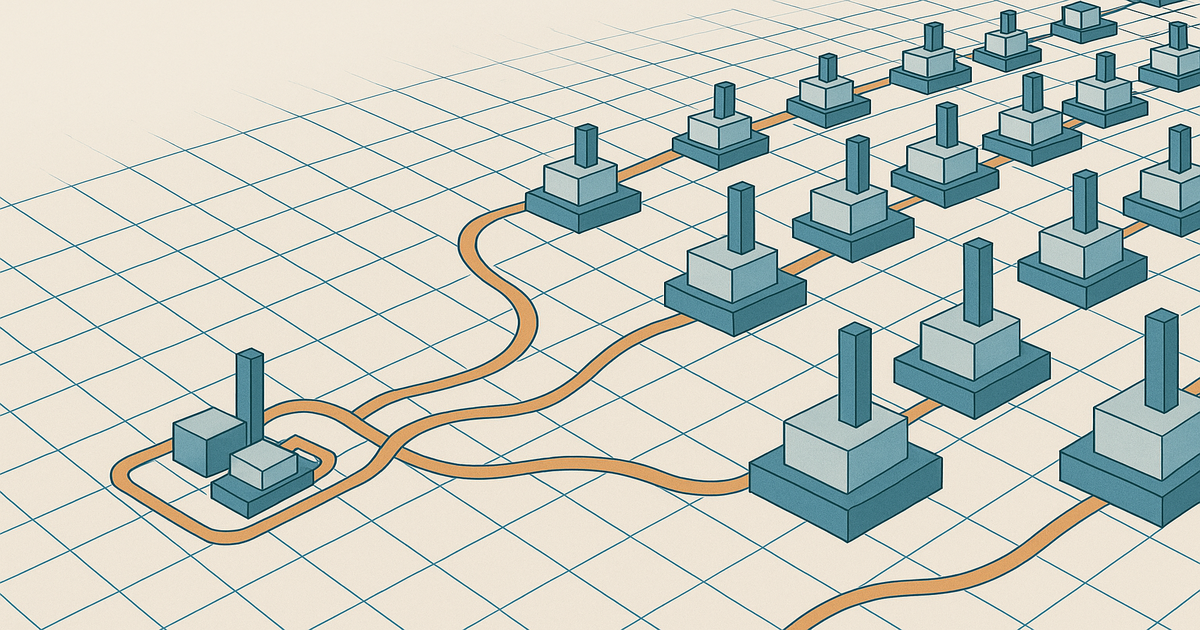
Manufacturing pilots usually fail for operational reasons, not technical ones. The workflow works in a controlled pocket, but the plant system around it is unchanged. The World Economic Forum has documented how Industry 4.0 initiatives stall when the surrounding operating model is not adapted alongside the technology.
Supervisors are part of the architecture
If shift leaders do not know how the workflow changes, the pilot stays local. Supervisor routines, KPI reviews, and exception handling all need redesign before rollout.
Local adoption has to be visible
Plant rollouts need more than training completion. Leaders need adoption markers that show where the new operating rhythm is holding and where it is slipping. Research from Boston Consulting Group on manufacturing transformation confirms that measurable adoption signals are a stronger predictor of success than technology readiness alone.
Production value comes from sequence
Diagnose clarifies ownership and KPI baselines. Build hardens the workflow. Transition prepares plant leadership. Assure keeps the cadence alive after launch.
Related reading
- Transform offer
- Why AI pilots fail to reach production
- The manager layer in workforce transition for AI programs
Relevant next step
Diagnose the real blockers before scaling
Use the Diagnose offer when the program needs a clearer owner map, readiness baseline, and rollout sequence.
Prefer a lower-friction start? Get the AI Readiness Self-Assessment.